ChatGPT cannot be a personal trainer. It can generate workout templates, explain exercise techniques, and answer general fitness questions — but it cannot observe your movement, adjust programming based on live performance, screen for contraindicated exercises, or take professional responsibility for your training outcomes. Personal training requires real-time feedback, clinical judgment, and human accountability that no current language model provides.
This article breaks down exactly what ChatGPT does and doesn't do in a fitness context, where AI tools genuinely help, and what coaches and clients should understand before making any AI-driven training decisions.
Key Takeaways
- ChatGPT can generate generic workout templates and explain exercises, but cannot observe movement, monitor real-time fatigue, or hold professional liability
- AI language models frequently produce inaccurate fitness recommendations, particularly for special populations and injury rehabilitation contexts
- Research by the National Strength and Conditioning Association shows that autoregulation — adjusting load based on daily readiness — requires a trained human observer, not a text-based AI
- Certified coaches using AI coaching platforms outperform both AI-only and unassisted coaching in client outcomes and coach capacity
- The best use of AI in fitness is as a productivity and analytics layer for professional coaches, not a standalone replacement
What ChatGPT Can Do for Fitness
ChatGPT performs well at fitness tasks that involve generating structured text from patterns in its training data: writing workout templates, explaining standard exercise technique, drafting general nutrition frameworks, and answering questions that have well-documented answers in exercise science literature. For someone with no access to a coach and no budget, it is better than no guidance at all.
Specifically, ChatGPT delivers reasonable output for:
- Program templates for beginners: A request for a 3-day full-body program for a healthy adult beginner will typically yield a structurally sound starting framework — correct rep ranges, logical exercise selection, appropriate rest periods. The output won't account for the individual's injury history or movement patterns, but it provides usable scaffolding.
- Exercise technique descriptions: Text descriptions of how to perform a squat, deadlift, overhead press, or row are largely accurate. The technique cues reflect standard coaching language found in widely available exercise science resources.
- Foundational fitness concepts: Questions about progressive overload, periodization principles, RPE versus percentage-based loading, or general macronutrient targets will receive accurate explanations derived from well-documented exercise science.
- Content generation for coaches: Coaches can use ChatGPT productively for drafting client education materials, email templates, FAQ documents, and programming rationale explanations — tasks that are time-consuming but don't require real-time client knowledge.
The pattern is consistent: ChatGPT succeeds when the task involves retrieving and reformatting general knowledge. It fails when the task requires individual assessment, real-time observation, or professional judgment about a specific person in a specific physical state.
What ChatGPT Cannot Do as a Personal Trainer
ChatGPT cannot perform the core functions that define professional personal training. These are not limitations of the current model version — they are structural constraints of language models that no iteration of GPT will resolve through text generation alone.
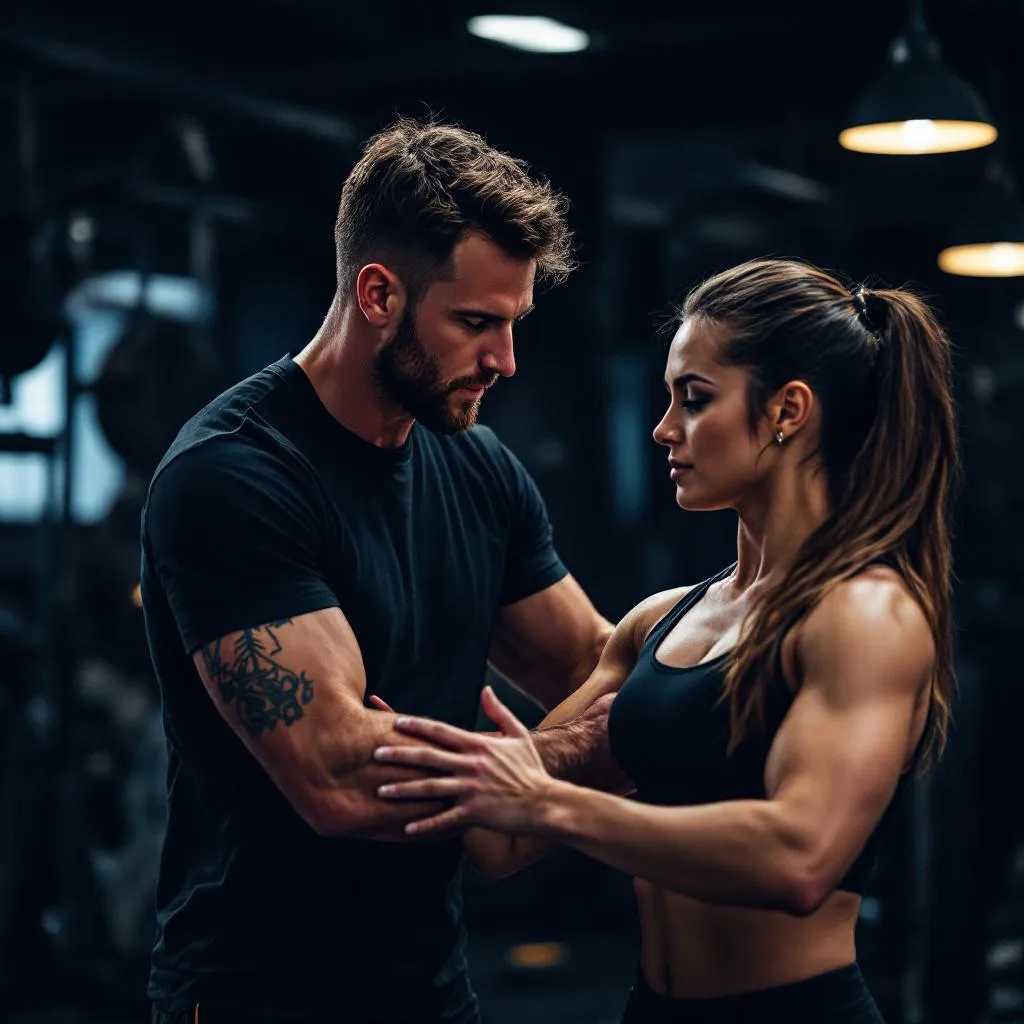
Real-time movement assessment is not possible. A personal trainer watches a client squat, identifies knee cave and forward trunk lean, and cues corrections before the next rep. ChatGPT has no camera, no visual processing during a live session, and no ability to intervene in the moment. Even with asynchronous video uploads to multimodal AI, the feedback loop is too slow to prevent acute injury during a working set, and the analysis cannot replicate a trained coach's eye for compensatory patterns.
Autoregulated programming requires a trained observer. The National Strength and Conditioning Association (NSCA) has published extensively on autoregulation — adjusting training intensity based on a client's daily readiness, fatigue markers, and observed bar speed. This intervention consistently produces better long-term strength outcomes than rigid percentage-based programming. Autoregulation requires a coach present and watching. ChatGPT can only respond to what a user manually types, which introduces both a timing lag and a reliability problem: clients under-report fatigue and over-report readiness more often than not.
Accountability is relational, not textual. The accountability mechanism in personal training comes from the coach-client relationship — the social obligation to show up, the coach noticing an absent check-in, the real consequence of having a professional who monitors your progress. Research published in the Journal of Strength and Conditioning Research demonstrates that athletes with supervised strength programs consistently outperform self-directed athletes on both adherence and long-term strength gains. ChatGPT cannot follow up, cannot notice missed sessions, and cannot replicate the motivational effect of a human professional who is invested in your progress.
AI hallucination is a genuine safety risk. Language models frequently generate plausible-sounding but incorrect fitness recommendations. They fabricate research citations, invent exercise progressions, and produce contraindicated recommendations for special populations. This is not a glitch — hallucination is an inherent property of large language models.
For a healthy adult with no medical history doing a beginner program, a hallucinated rep scheme is mostly harmless. For a post-surgical athlete, a client with anterior knee pain, or a 60-year-old with osteoporosis, incorrect guidance from a confident AI output is a genuine injury risk.
The scope of practice issue is categorical. Certified personal trainers, credentialled through organizations like NASM or ACE Fitness, complete health history intake, screen for contraindicated exercises, and maintain professional liability insurance. ChatGPT has no scope of practice, no certification, and no liability mechanism. There is no recourse if an AI-generated program injures a client.
The Safety Gap in AI-Only Training
AI-only training creates a safety gap that is particularly dangerous for populations who would most benefit from professional guidance. The American College of Sports Medicine (ACSM) recommends medical clearance and exercise prescription by qualified professionals for older adults, post-surgical clients, individuals with metabolic conditions, and anyone with a history of cardiovascular events. ChatGPT cannot perform the pre-participation health screening that identifies when these referrals are necessary.
The practical problem is that AI tools don't know what they don't know. A client can describe their training history and goals to ChatGPT without mentioning a hip labral repair from two years ago, and the AI will generate a program that includes bilateral hip hinge patterns at high loads — because it has no mechanism to identify the missing information as critical.
Verify AI fitness claims before applying them
ChatGPT regularly cites non-existent research studies when asked for evidence-based fitness recommendations. Before applying any AI-generated training claim to real programming, verify it against published literature from NSCA, ACSM, or PubMed. A plausible citation format does not confirm a study exists.
There is also the question of supervision during training. Research consistently shows that supervised resistance training produces better technical execution, higher session effort, and lower injury rates than unsupervised training — particularly in the first 6-12 months when movement patterns are being established. ChatGPT provides no supervision. At best, it provides information that a motivated individual can try to apply without guidance.
For coaches building an online personal training practice, understanding this safety gap matters professionally. Coaches who use AI tools to generate programming templates still bear professional responsibility for those programs. The AI generates a draft; the coach is accountable for the outcome. This accountability structure is worth communicating explicitly to clients who ask whether they can "just use ChatGPT."
How Professional Coaches Use AI Tools
The right framing for AI in fitness is not "ChatGPT versus human coach" — it is "coach without AI tools versus coach with AI tools." Professional coaches who integrate AI into their practice maintain coaching quality while increasing the number of clients they can serve effectively. This is the productivity layer model that McKinsey's research on AI adoption in professional services documents across multiple industries: AI handles the scalable, pattern-based tasks; the professional handles the judgment calls.
In practice, coaches use AI coaching platforms for:
- Training data analysis at scale: An AI analytics layer can surface patterns across a coach's full client roster — identifying which clients are showing fatigue trends across multiple consecutive sessions, which programs are producing the best strength gains for a given client profile, and which clients haven't logged a session in four days. A coach managing 30 clients cannot manually track these signals; an AI platform surfaces them automatically.
- Program template generation: Coaches use AI to generate structurally sound first drafts of programs, then apply their judgment, client knowledge, and movement screening findings to edit and personalise. The AI handles the boilerplate; the coach handles the nuance that produces real results.
- Automated check-in workflows: AI-assisted coaching platforms handle routine communication — session reminders, weekly check-in prompts, progress report summaries — freeing the coach for the high-value interventions that only a human can deliver.
- Performance trend identification: AI can detect when a client's training data shows signs of accumulated fatigue, stalled progress on key lifts, or declining session quality before the coach would notice manually. This early-warning capability improves programming decisions.
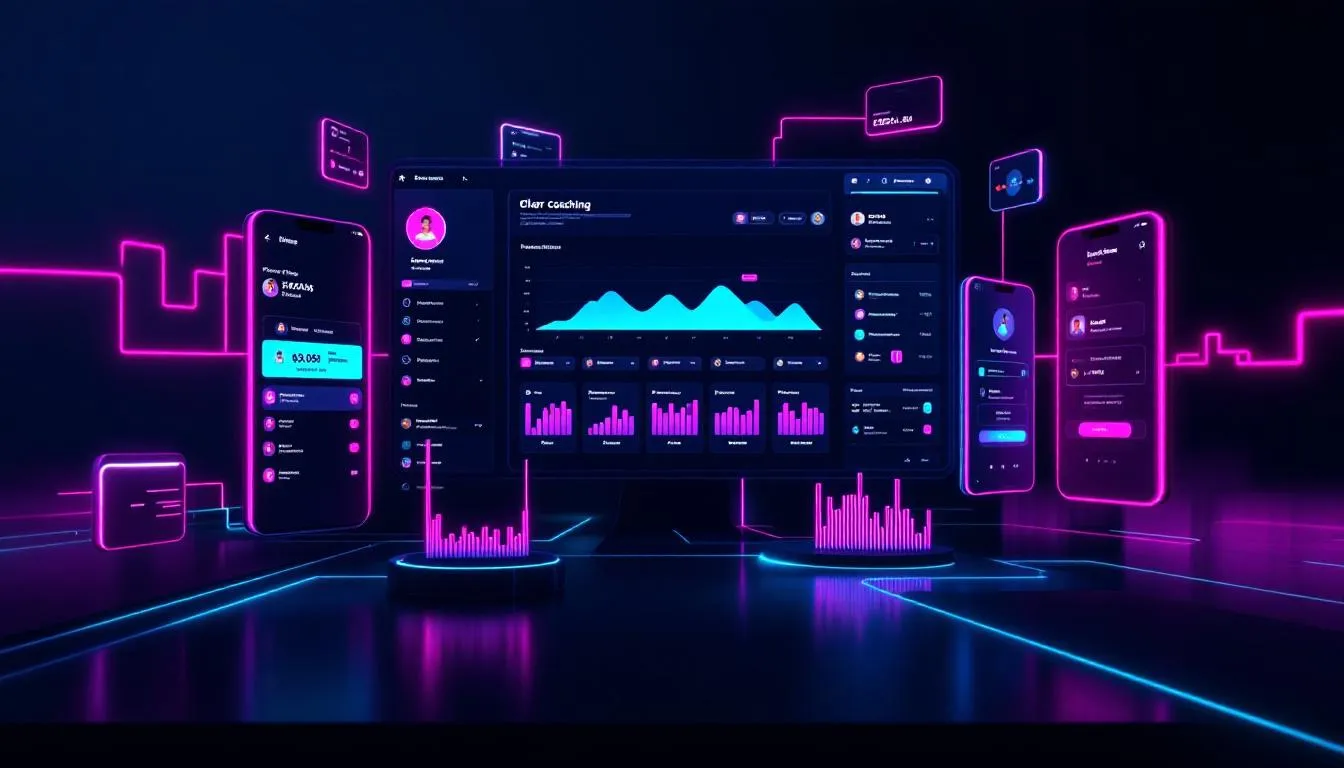
IronCoaching's AI Insights dashboard is built on this model. It surfaces patterns and flags anomalies across a coach's client portfolio — but every programming decision remains with the coach. This is structurally different from asking ChatGPT to generate a program and sending it to a client without review.
For coaches who want to understand the full professional picture of what this model looks like in practice, the online personal training guide covers how professional coaches structure remote delivery with the right tools — and how online strength coaching differs from a simple ChatGPT subscription.
Understanding the difference between AI as a replacement and AI as a professional productivity layer is the most important concept for any coach evaluating technology for their practice. Coaches who blur this line — using AI-generated programs as finished products without professional review — are taking on significant liability exposure.
The coach stays in charge
AI tools generate drafts; professional coaches own outcomes. Every AI-generated program, check-in summary, or training recommendation should pass through a certified coach's review before reaching a client. The value proposition is speed and scale — not removal of professional judgment.
ChatGPT vs AI Coaching Platform vs Human Coach
The practical question for both clients and coaches is rarely a binary choice. Most people in 2026 will interact with AI fitness tools in some form, whether or not they work with a professional coach. The question worth answering is: what combination of tools and professional support produces the best training outcomes?
The Coach's Guide to Workout Program Design makes clear that effective programming depends on variables ChatGPT cannot reliably optimize: movement screening findings, training history, fatigue management across mesocycles, and injury history that shapes exercise selection. These are judgment calls, not pattern-matching tasks.
| Capability | ChatGPT | AI Coaching Platform | Certified Human Coach |
|---|---|---|---|
| Generate program template | ✓ | ✓ | ✓ |
| Real-time form feedback | ✗ | ✗ | ✓ |
| Adjust based on daily readiness | ✗ | Partial (with coach) | ✓ |
| Track client progress over time | ✗ | ✓ | ✓ |
| Professional accountability | ✗ | ✗ | ✓ |
| Safe for special populations | ✗ | With coach oversight | ✓ |
| Scale to 30+ clients efficiently | ✗ | ✓ | Difficult alone |
| Identify fatigue trends at scale | ✗ | ✓ | Difficult alone |
| Professional liability coverage | ✗ | ✗ | ✓ |
| Cost per client / month (approx.) | $0–20 | $30–100 | $200–600+ |
The comparison points to a clear conclusion: neither ChatGPT alone nor an AI coaching platform alone delivers what a certified coach delivers. The highest-performance model is a certified coach using a professional AI coaching platform — the combination of human judgment with AI-scale analytics.
This is the model that the coaching business is moving toward. For coaches building client acquisition systems and thinking about how to get personal training clients, offering professional AI-augmented coaching — not AI-only coaching — is the differentiator that justifies premium pricing.
Summary: Where AI Fits in Fitness Coaching
| Scenario | Recommended Approach | Key Reason |
|---|---|---|
| Healthy adult beginner, no budget | ChatGPT as a starting framework | Low risk; better than no structure |
| Client with injury history or medical conditions | Certified coach only | AI cannot screen for contraindications |
| Coach managing 1–10 clients | Coach + basic templates | AI tools add limited value at this scale |
| Coach managing 20+ clients | Coach + AI coaching platform | Essential for tracking and analytics at scale |
| Online coach building a scalable practice | IronCoaching platform | Structured check-ins, progress tracking, AI insights |
| Client comparing ChatGPT to hiring a coach | Professional coach wins on outcomes | Accountability, assessment, liability |
The AI tools available today — including ChatGPT — are genuinely useful as a productivity layer for professional coaches. They are not a substitute for certified personal training, and presenting them as one to clients or to yourself as a coach is both professionally incorrect and potentially unsafe.
For coaches exploring what a professional AI-augmented practice looks like from an operational standpoint, the client management tools and program builder on IronCoaching are designed specifically to give coaches the analytics infrastructure to scale without compromising the quality of the coaching relationship.
If you've encountered clients asking about AI personal trainers or considered AI tools as an alternative to professional coaching, the honest answer is: use both, with the professional in charge.
Frequently Asked Questions
No. ChatGPT can generate workout templates and explain exercise concepts, but it cannot provide real-time movement assessment, adjust programming based on observed performance, or take professional responsibility for training outcomes. The core functions of personal training — assessment, autoregulation, and accountability — require a human professional.
For healthy adults with no injury history and no medical conditions, a ChatGPT workout plan is generally low risk if it follows basic principles like progressive overload and adequate recovery. It is not appropriate for post-surgical clients, older adults with medical conditions, or anyone requiring individualized exercise prescription. Always have a certified coach review AI-generated programs before following them.
ChatGPT can generate workout templates, describe exercise technique, draft nutrition frameworks, and answer general fitness questions accurately. It performs well for text-based tasks drawing on widely documented exercise science. It cannot observe, assess in real time, or adjust programming based on physical performance.
Professional coaches use AI as a productivity and analytics layer — generating first-draft programs that they then personalise, analyzing training data patterns across their client roster, and automating routine communication tasks. Platforms like IronCoaching provide structured AI Insights that surface fatigue trends and program effectiveness data while keeping every coaching decision with the certified professional.
ChatGPT is a general-purpose language model that can produce fitness content but has no coaching infrastructure, client data history, or ongoing relationship capability. An AI coaching platform integrates with client training data, tracks progress longitudinally, and provides coaches with structured analytics. The key distinction: a coaching platform supports the professional coach-client relationship; ChatGPT operates as a standalone text generator.
ChatGPT is acceptable as an initial orientation tool for healthy adults with straightforward goals. For anyone with specific performance targets, injury history, or health conditions, working with a certified coach who uses professional tools is both safer and more effective. AI tools are most valuable when a professional is reviewing and applying the output.
Not with current or near-term technology. The core value of personal training — real-time physical observation, professional judgment calibrated to individual movement patterns, and the human accountability relationship — requires human presence. AI will continue to increase coach capacity and analytical capability, but the certified coaching relationship remains the standard of care for optimal and safe training outcomes.
Sources & References
- National Strength and Conditioning Association (NSCA) — "Position Statement on Autoregulation in Resistance Training" (2023)
- Journal of Strength and Conditioning Research — "Supervised versus self-directed resistance training: adherence and long-term strength outcomes" (2023)
- American College of Sports Medicine (ACSM) — "ACSM's Guidelines for Exercise Testing and Prescription, 11th Edition" (2022)
- NASM (National Academy of Sports Medicine) — "Personal Training Scope of Practice Guidelines" (2024)
- McKinsey Global Institute — "The state of AI in 2024: Generative AI adoption in professional services" (2024)