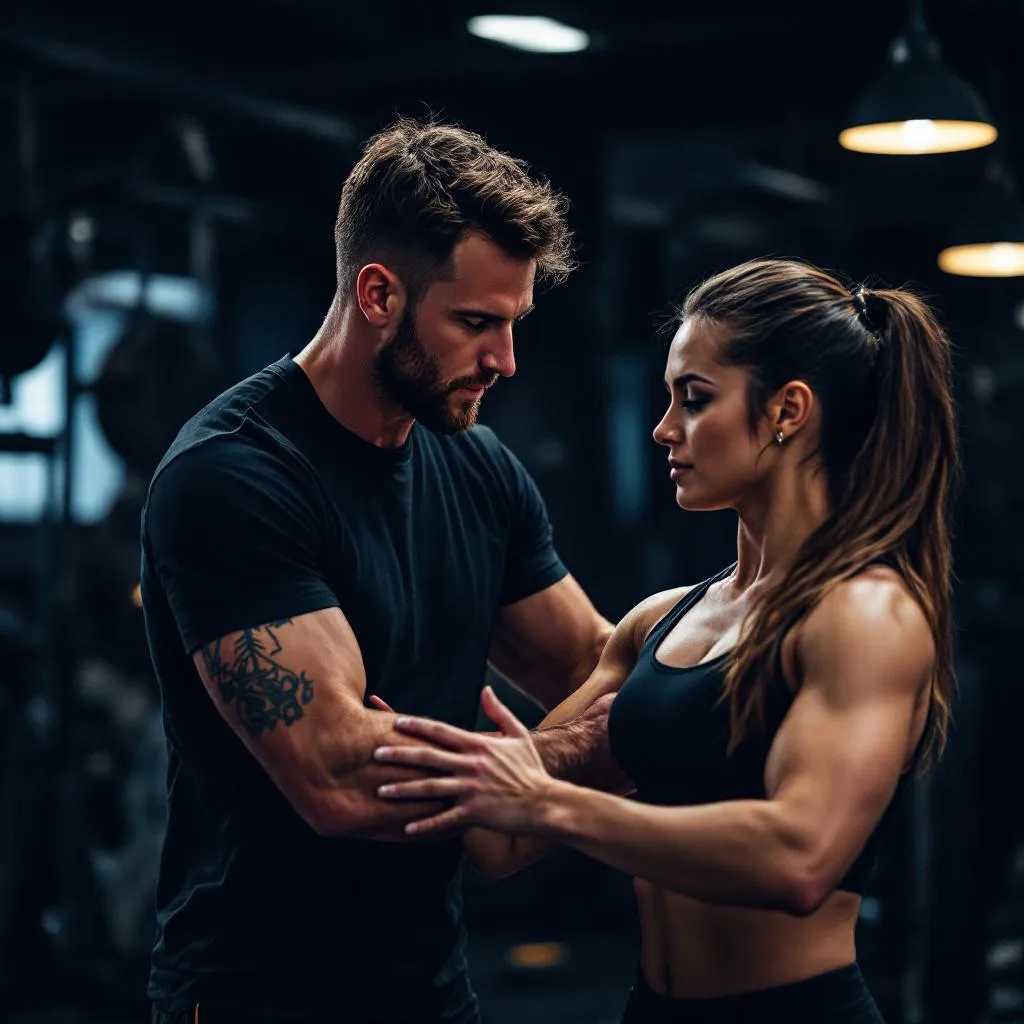
An exercise coach is a fitness professional who designs and delivers structured, goal-driven movement programs — not just spot-correcting form in a gym, but building a progressive training system around each client's physiology, history, and objectives. The role sits between a general personal trainer and a specialist strength or performance coach, making it one of the most versatile careers in the fitness industry.
Key Takeaways
- An exercise coach designs individualised, periodised programs and coaches clients through ongoing progress — not one-off sessions
- The role is distinct from a personal trainer (session-led) and a strength coach (sport-performance-focused)
- Key certifications include NSCA-CSCS, NASM CPT, ACE CPT, and ACSM credentials
- According to the U.S. Bureau of Labor Statistics, fitness trainer employment is projected to grow 14% through 2033 — well above the average for all occupations
- A dedicated coaching platform like IronCoaching's Program Builder lets exercise coaches deliver professional, trackable programs to clients online
What Is an Exercise Coach?
An exercise coach is a credentialed fitness professional who assesses a client's movement quality, physical fitness, and goals, then builds a tailored program to develop those capabilities over time. The defining characteristic of an exercise coach is the programme-first approach: every session is part of a structured progression plan, not a standalone workout.
The term is used across three main contexts:
- General fitness coaching — helping everyday clients lose body fat, build muscle, improve mobility, or increase energy levels
- Performance coaching — working with recreational athletes on sport-specific movement, strength, and conditioning
- Corrective and rehabilitative coaching — clients with movement dysfunction, injury history, or chronic pain who need structured reconditioning
According to the American College of Sports Medicine (ACSM), effective exercise prescription requires assessment, goal-setting, periodisation, and ongoing adjustment — a framework that defines the exercise coach's role precisely.
Exercise Coach vs Personal Trainer vs Strength Coach
Exercise coach, personal trainer, and strength coach are often used interchangeably, but they describe meaningfully different roles. Understanding the distinctions helps coaches position themselves and helps clients find the right professional.
| Role | Primary Focus | Client Type | Programme Approach | Typical Setting |
|---|---|---|---|---|
| Exercise Coach | Holistic movement & lifestyle | General population + recreational athletes | Periodised, long-term | Online or in-person |
| Personal Trainer | Session-by-session fitness | General population | Session-led, varies | Gym floor, studio |
| Strength Coach | Strength & power performance | Competitive athletes | Sport-specific periodisation | Weight room, sports facility |
| Exercise Physiologist | Clinical exercise prescription | Medical/rehabilitation | Evidence-based clinical protocols | Hospital, rehab centre |
A personal trainer typically works within a gym's schedule — clients book sessions and the trainer guides them through a workout. An exercise coach, by contrast, builds a structured program in advance and coaches clients through it week-by-week, tracking adherence and progress between sessions.
A strength coach (as defined by the NSCA) focuses specifically on developing strength and power in athletes, often working with competitive teams or sports academies. The exercise coach role is broader and less sport-specific. For a full breakdown of the sport-specific S&C role, see what a strength and conditioning coach does.
For more on how specialist coaching roles differ, read our breakdown of what a bodybuilding coach does and the complete guide to online strength coaching.
What Does an Exercise Coach Do?
An exercise coach's responsibilities span assessment, program design, delivery, and ongoing client management. Here is what the role looks like day-to-day.
Initial Client Assessment
The coaching relationship starts with a comprehensive intake. According to ACE Fitness, a thorough assessment should include health history screening, postural and movement evaluation, baseline fitness testing, and structured goal-setting. This data shapes every programming decision that follows.
A quality assessment typically covers:
- Health history: injuries, medical conditions, medications, previous training
- Movement screen: mobility, stability, compensatory patterns
- Fitness baseline: cardiovascular endurance, strength levels, body composition (if relevant)
- Goals and timeline: specific outcomes, lifestyle constraints, training availability
Program Design and Periodisation
The core of the exercise coach role is building a structured, periodised program. Periodisation — organising training into progressive phases — produces significantly greater strength and fitness gains than unstructured training. The NSCA's position on periodisation defines it as the systematic planning of training to achieve peak performance at the right time.
A well-designed program includes:
- Macrocycle: the full training timeline (e.g., 12-week strength phase)
- Mesocycles: 3-5 week training blocks with focused adaptations
- Microcycles: weekly training structure with work-to-rest ratios
- Progressive overload: systematic increases in volume, intensity, or complexity
- Deload weeks: planned recovery periods to prevent overtraining
The IronCoaching Program Builder gives exercise coaches a structured environment to build and deliver these programs digitally, with templates, exercise libraries, and client-facing progress tracking.
Ongoing Coaching, Feedback, and Adjustments
Program delivery is not a one-way street. An effective exercise coach monitors client progress, provides technique cues, and adjusts the program in response to data — not just intuition.
Key ongoing coaching tasks include:
- Session check-ins: reviewing adherence, session feel, and RPE feedback
- Form and technique coaching: video review, cue cards, or in-person correction
- Progressive adjustments: adding load, changing exercise selection, or modifying volume based on performance
- Accountability and motivation: regular communication, habit tracking, and milestone celebration
Coach smarter, not harder
Tracking client progress with actual data — not memory — is what separates high-retention coaches from average ones. Even a simple weekly check-in form capturing perceived effort, soreness, and adherence gives you the signal to make better programme decisions.
As AI fitness tools become more common, clients increasingly ask whether apps like ChatGPT can replace the ongoing coaching relationship. They cannot — AI cannot observe movement, adjust to daily readiness, or provide the accountability that drives adherence. For a direct comparison of where AI assists and where professional expertise is irreplaceable, see our analysis of what ChatGPT can and can't do as a personal trainer.
Exercise Coach Certifications and Qualifications
Reputable exercise coaches hold at least one recognised fitness certification. Here are the most widely respected credentials in the industry.
Top Exercise Coach Certifications
NSCA Certified Strength and Conditioning Specialist (CSCS) The gold standard for coaches working with athletes and performance-focused clients. Requires a bachelor's degree in a related field and passes a rigorous two-part examination. The NSCA is the global authority for strength and conditioning certification.
NASM Certified Personal Trainer (CPT) The NASM CPT is one of the most widely recognised entry-level credentials, built around the Optimum Performance Training (OPT) model. Widely accepted across commercial and independent coaching settings.
ACE Certified Personal Trainer ACE Fitness offers a CPT credential grounded in evidence-based exercise science. ACE also offers specialist certifications in health coaching, group fitness, and medical exercise.
ACSM Certified Exercise Physiologist (EP-C) The ACSM EP-C credential is aimed at coaches working with clinical populations — those with chronic disease, obesity, or cardiac risk factors. Requires a degree in exercise science or kinesiology.
Degree Pathways
Many exercise coaches hold formal degrees alongside their certifications:
- Exercise Science (B.S.) — physiology, biomechanics, strength and conditioning
- Kinesiology (B.S.) — movement science, human performance
- Sports Science (B.S. / B.Sc.) — common in UK, Australia, and NZ markets
Formal education is not always mandatory for certification, but it provides deeper physiological knowledge and often accelerates career progression. Coaches who want to advance beyond the standard CPT can pursue advanced designations — including NASM Master Trainer status and the ACE Master Fitness Trainer Certification — which require completing multiple specializations. See the full breakdown of what those credentials require in the guide to becoming a master fitness trainer.
Skills Every Exercise Coach Needs
Technical credentials matter, but the best exercise coaches also develop a range of interpersonal and business skills that drive client outcomes and retention.
Technical Skills
- Movement assessment: identifying compensations, mobility restrictions, and stability deficits
- Program design: periodisation models (linear, undulating, block), exercise selection, load prescription
- Anatomy and physiology: understanding how muscles, joints, and systems respond to training stress
- Nutrition fundamentals: basic macronutrient guidance and energy balance (within scope of practice)
Interpersonal Skills
- Active listening: understanding what clients actually want, not just what they say they want
- Behaviour change coaching: NASM's behaviour change model emphasises that motivation and adherence are coachable skills, not fixed traits
- Clear communication: explaining complex concepts in accessible language
- Accountability structures: building systems that keep clients consistent between sessions
Business and Tech Literacy
Exercise coaches who build a sustainable practice also need:
- Client intake and onboarding systems
- Program delivery tools (digital or in-person)
- Scheduling and payment infrastructure
- Progress reporting and client communication workflows
IronCoaching's fitness coaching platform combines these elements — program delivery, client communication, and progress analytics — in one environment, so exercise coaches can focus on coaching rather than administration.
For a practical breakdown of attracting your first clients, read how to get personal training clients.
How to Become an Exercise Coach
Becoming an exercise coach follows a fairly clear path, though the right route depends on your target niche and existing background.
Step 1: Choose a Certification Pathway
Start with a recognised certification that matches your target client type:
- General fitness clients → NASM CPT or ACE CPT
- Athletes and performance clients → NSCA-CSCS or CSPS
- Clinical or medical populations → ACSM EP-C
Most certifications require a current CPR/AED credential and can be completed in 3-6 months of self-study.
Step 2: Gain Practical Experience
Passing an exam is not the same as being a good coach. Practical experience — whether through an internship, mentorship, or volunteer coaching — accelerates skill development faster than coursework alone.
Starting points include:
- Gym floor trainer positions (commercial or boutique)
- Assisting an experienced exercise coach or strength coach
- Volunteering with a local sports club or community fitness program
Step 3: Specialise in a Niche
Generalist exercise coaches face more competition than specialists. Choosing a niche — powerlifting, endurance sport, women's health, corporate wellness, post-rehabilitation — makes marketing easier and attracts higher-quality clients.
Read our guide to online strength coaching and our workout program design guide for deep dives into the programming skills specialist coaches need.
Step 4: Build Your Coaching Business
Online exercise coaching has significantly expanded the market for independent coaches. A coach with 20 online clients at $200/month generates $4,000/month — a viable part-time or full-time income depending on location and cost structure.
Key decisions when building your coaching business:
- Online vs in-person delivery — or a hybrid model
- Pricing structure — monthly retainer vs session packages vs program-only
- Client acquisition — referrals, social media, local networking
- Tools and platforms — for program delivery, communication, and payment
Our guide on how to start a personal training business covers the business setup process in detail.
Price for recurring revenue
Monthly coaching retainers produce more predictable income than session-by-session billing. Clients who commit to a monthly programme are also more likely to complete the full training cycle — which drives better results and stronger referrals.
How to Find the Right Exercise Coach
For clients looking to hire an exercise coach, the process involves more than searching for the nearest certified trainer.
Credentials to Look For
At minimum, verify that a prospective exercise coach holds a certification from a nationally recognised body (NSCA, NASM, ACE, or ACSM) and carries current professional liability insurance. A degree in exercise science or kinesiology is a strong secondary indicator of knowledge depth.
Questions to Ask Before Hiring
- What is your experience with clients who have similar goals to mine?
- How do you design and structure your programs?
- What does a typical coaching engagement look like week-to-week?
- How do you track my progress between sessions?
- What happens if I need to modify my program?
In-Person vs Online Exercise Coach
Both delivery models have real advantages. In-person coaching allows immediate form correction and hands-on cueing. Online coaching offers more flexibility, a wider pool of specialist coaches, and often lower cost.
Online exercise coaches typically deliver programs through a coaching app or platform, with video check-ins, written feedback on logged sessions, and asynchronous communication between weekly calls.
What Does an Exercise Coach Cost?
Pricing varies widely by location, experience, and delivery model:
- In-person exercise coaching: $60-150 per session in most US and Australian markets
- Online exercise coaching: $100-400/month for a structured monthly program
- Hybrid coaching (online program + periodic in-person sessions): $150-350/month
More experienced coaches with specialist credentials command higher rates. The BLS Occupational Outlook for fitness trainers shows median annual wages of around $46,000 — though independent coaches with strong client bases often significantly exceed this.
Exercise Coach at a Glance
| Factor | Detail |
|---|---|
| Definition | Fitness professional who designs and delivers structured, periodised programs |
| Key distinction | Programme-first approach vs session-led personal training |
| Core certifications | NSCA-CSCS, NASM CPT, ACE CPT, ACSM EP-C |
| Typical client | General fitness, recreational athlete, or corrective/rehab population |
| Income range | $46K–$80K+ per year (employed); $50K–$120K+ (independent/online) |
| Career outlook | 14% job growth projected through 2033 (BLS) |
| Best tool for scale | Online coaching platform with program builder and client management |
Frequently Asked Questions
An exercise coach is a certified fitness professional who designs personalised, periodised training programs and coaches clients through progressive development over time. Unlike a gym instructor who reacts to client requests, an exercise coach proactively builds a structured plan around each client's goals, history, and movement quality.
A personal trainer typically leads clients through individual sessions with varying structure. An exercise coach designs a long-term programme upfront and coaches clients through it systematically, tracking progress and adjusting variables — volume, load, exercise selection — based on data between sessions.
Most exercise coaches hold a nationally recognised certification such as the NSCA-CSCS, NASM CPT, ACE CPT, or ACSM EP-C credential. Many also hold a bachelor's degree in exercise science, kinesiology, or sports science. All credentialed coaches maintain current CPR/AED certification.
In-person exercise coaching typically costs $60–150 per session. Online exercise coaching runs $100–400 per month for a structured monthly program. Specialist coaches — those focusing on powerlifting, athletic performance, or clinical populations — often charge at the higher end of these ranges.
Choose a certification pathway (NSCA, NASM, ACE, or ACSM), complete the required study and exams, then build practical experience through coaching roles or mentorships. Specialising in a niche — strength, athletic performance, or corrective exercise — accelerates both career progress and client acquisition.
The terms are often used interchangeably, but exercise coach more specifically implies a programme-design and movement-assessment focus, while fitness coach is sometimes used more broadly to include nutrition coaching, lifestyle habits, and accountability work beyond structured exercise programming.
Exercise coaches use a combination of assessment tools (movement screens, fitness tests), programming software or spreadsheets, and client communication platforms. Dedicated coaching platforms like IronCoaching combine program building, client management, and progress tracking in one place — reducing administrative overhead for independent coaches.
Sources & References
- U.S. Bureau of Labor Statistics — "Fitness trainers and instructors employment projected to grow 14% through 2033, much faster than average" (2024 Occupational Outlook Handbook)
- American College of Sports Medicine (ACSM) — ACSM's Guidelines for Exercise Testing and Prescription define the framework for assessment, goal-setting, periodisation, and adjustment in evidence-based exercise coaching (2024)
- National Strength and Conditioning Association (NSCA) — NSCA defines periodisation as "the systematic planning of athletic training" and sets the professional standard for strength and conditioning credentials (CSCS Exam Content Description, 2024)
- ACE Fitness — ACE's Integrated Fitness Training Model emphasises movement assessment and behaviour change as core components of effective exercise coaching (ACE Personal Trainer Manual, 2023)
- NASM — NASM's Optimum Performance Training (OPT) model and behaviour change principles define the progressive training methodology used by NASM-certified exercise coaches (2024)