A corrective exercise specialist (CES) is a fitness professional credentialed to assess movement dysfunctions, identify their underlying causes, and prescribe targeted exercise interventions to restore optimal movement patterns. Where a general personal trainer builds fitness, a CES first identifies what is limiting movement quality — and removes those barriers before loading the client further.
For coaches, the CES credential opens a specialisation that commands premium rates, attracts underserved client populations (post-rehabilitation, chronic pain, desk workers, older adults), and positions you as the professional that other trainers refer to when they encounter movement complexity they cannot address. This guide covers what corrective exercise specialists do, how to earn the NASM CES credential, which clients benefit most, and how to build the specialisation into a profitable coaching practice.
Key Takeaways
- A corrective exercise specialist (CES) assesses and corrects movement dysfunctions before applying progressive load — reducing injury risk and improving long-term training outcomes
- The NASM CES is the most widely recognised corrective exercise credential; it requires an active CPT and involves a movement systems curriculum covering overactive/underactive muscles, inhibition, lengthening, activation, and integration
- Corrective exercise clients include post-rehab athletes, desk workers with postural dysfunction, older adults, and general population clients with chronic pain or injury history
- CES-certified coaches can charge a $10–$20 per session premium over standard PT rates and attract referrals from physical therapists and sports medicine providers
- The OPT Model's corrective exercise protocol (inhibit → lengthen → activate → integrate) is the core clinical framework for practising CES coaches
- Integrating corrective exercise into your existing coaching practice requires only a modified intake assessment and a structured warm-up protocol — it does not require rebuilding your entire programming approach
What Is a Corrective Exercise Specialist?
A corrective exercise specialist occupies the space between personal trainer and physical therapist. They are not licensed clinicians and do not diagnose or treat injury — that is the domain of physical therapists, orthopedic surgeons, and sports medicine physicians. What a CES does is assess movement quality, identify patterns of muscular imbalance or postural dysfunction, and use targeted exercise interventions to correct those patterns before or alongside standard fitness programming.
The core insight behind corrective exercise is that most people who come to a personal trainer are not moving optimally. Years of sedentary work, accumulated postural habits, old injuries, and asymmetrical sport or daily activity patterns create predictable patterns of overactivity and underactivity in the muscular system. A client who squats with knees caving inward, heels rising, or excessive forward lean is not simply "weak at squats" — they have specific muscles that are overactive (restricting joint motion) and specific muscles that are underactive (failing to produce the torque needed for optimal mechanics). Loading that client with progressive squat volume without first addressing the dysfunction makes the dysfunction worse and the injury risk higher.
A CES-certified coach identifies these patterns using standardised movement assessments, designs a corrective exercise protocol to restore balance, and then integrates the corrective work into the broader training program. Over time, this approach produces clients who move better, perform better, and experience significantly fewer overuse injuries — which means longer client relationships and better outcomes.
What Does a Corrective Exercise Specialist Actually Do?
The day-to-day work of a corrective exercise specialist involves three core activities:
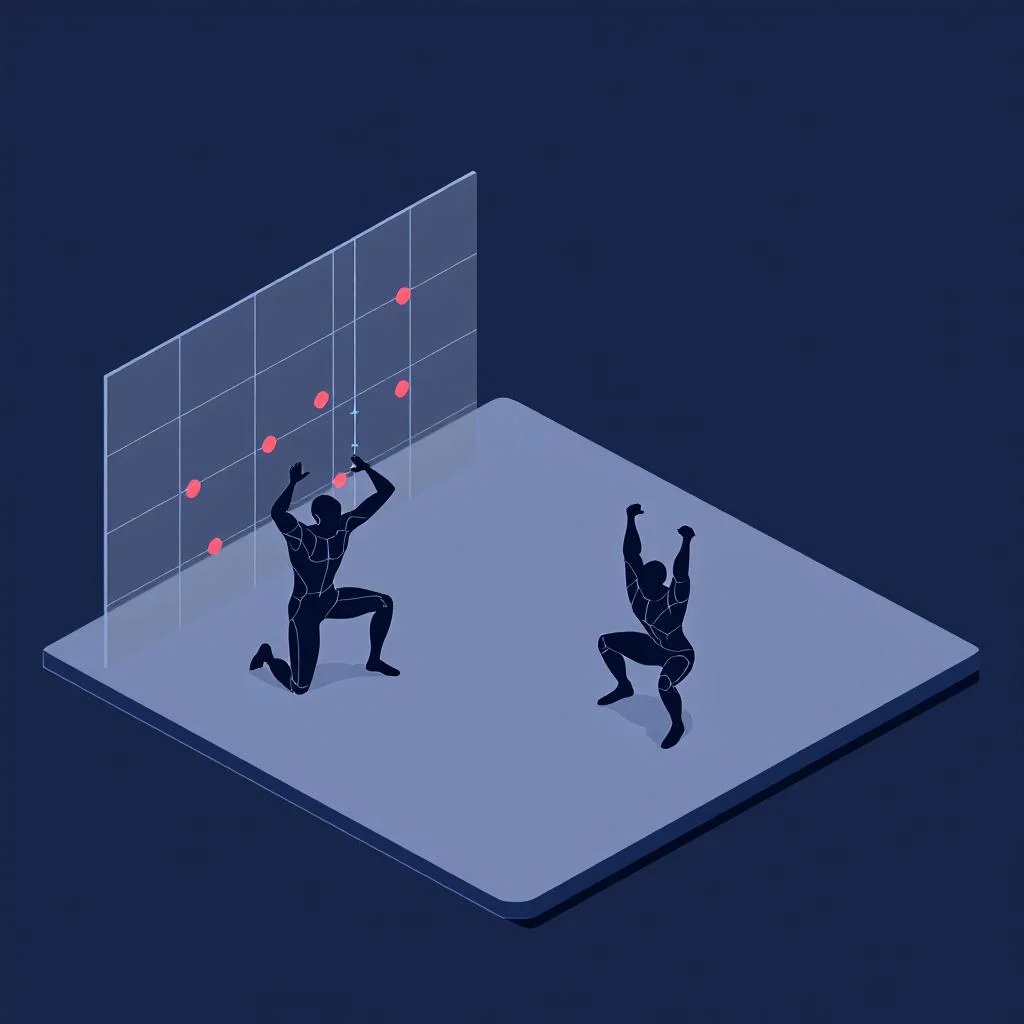
1. Movement assessment. The foundational tool is the Overhead Squat Assessment (OHSA), a standardised movement screen that reveals compensatory patterns throughout the kinetic chain when the client squats with arms overhead. Anterior pelvic tilt, knee valgus, asymmetrical weight shift, limited dorsiflexion, and excessive forward lean are among the patterns the OHSA reveals. More targeted assessments — the Single-Leg Squat Assessment, the Pushing Assessment, and the Pulling Assessment — help isolate dysfunctions to specific joints and muscle groups. A CES uses the data from these screens to build a corrective exercise prescription before adding significant load.
2. Corrective protocol design. Once dysfunctions are identified, the CES follows the NASM Corrective Exercise Continuum: inhibit (reduce activity in overactive muscles using foam rolling or static stretching), lengthen (stretch the shortened tissues further), activate (increase activity in underactive muscles using isolated strengthening), and integrate (reinforce the corrected pattern in the context of multi-joint functional movements). This four-step protocol — often abbreviated as the OPT Model's corrective phase — is typically programmed into the warm-up portion of a training session, allowing the main training block to proceed with better mechanics.
3. Program integration. Corrective exercise is not a separate program that replaces strength training — it is a layer that precedes or is embedded within the training session. A coach skilled in corrective exercise designs programs where every session begins with targeted inhibition and activation work, so the primary training block is performed by a client who is more neurologically prepared, moving with better mechanics, and experiencing less joint stress. Over a 12–16 week corrective cycle, the need for explicit corrective work typically decreases as the client's movement quality improves and their compensatory patterns resolve.
The NASM CES Certification: What It Covers
The NASM Corrective Exercise Specialist certification is the industry's most widely recognised CES credential. It is designed for active CPT-certified coaches who want to develop advanced skills in movement assessment and corrective programming.
Eligibility: You must hold an active NASM CPT (or an equivalent accredited personal trainer certification such as ACE-CPT, ACSM-CPT, or NSCA-CPT) before enrolling. There is no experience requirement beyond the base certification, though coaches who have worked with diverse populations get more out of the curriculum.
Curriculum structure: The NASM CES curriculum is organised around the NASM Movement Science Model, which provides a systematic framework for understanding how the nervous system, muscular system, and skeletal system interact to produce movement. Key topic areas include:
- Regional Interdependence: How dysfunction in one area of the kinetic chain affects mechanics elsewhere — for example, how limited ankle dorsiflexion drives knee valgus, which drives anterior pelvic tilt, which drives lower back pain
- Muscle Imbalances: The science of length-tension relationships and how chronic overactivity or underactivity creates predictable patterns of dysfunction
- Movement Assessments: Standardised protocols for the OHSA, Single-Leg Squat Assessment, Pushing Assessment, Pulling Assessment, and gait analysis
- Corrective Techniques: Foam rolling protocols, stretching techniques, isolated activation exercises, and integration movement patterns for each major kinetic chain region
- Program Design: How to construct corrective exercise warm-ups, how to periodise corrective work alongside strength programming, and when to refer clients to physical therapy or sports medicine
Study format and exam: The NASM CES course is self-paced, available online, and typically takes 4–6 months to complete depending on prior knowledge and study hours per week. The final exam is a 100-question multiple-choice assessment administered online. NASM reports a pass rate that rewards consistent study — most coaches who complete the full course materials and practice assessments pass on their first attempt.
CEU and renewal: The CES credential is maintained through NASM's standard renewal cycle (every 2 years), requiring 1.9 CEUs, which can be earned through continuing education courses, workshops, and relevant professional development.
Who Should Pursue the CES Credential?
The corrective exercise specialisation is not a fit for every coach — but for the right coaches, it is one of the highest-leverage credentials in the industry. Consider pursuing the CES if:
You regularly see clients with pain or injury history. If more than 30% of your client inquiries mention chronic lower back pain, shoulder impingement, knee pain, hip dysfunction, or previous orthopedic surgery, you are already working with a population that needs corrective exercise. Without the CES, you are either turning away these clients or working with them at risk. The credential gives you a systematic framework and the clinical language to communicate with their healthcare providers.
You work with desk workers and sedentary populations. The average office worker sits for 8–10 hours per day, creating predictable patterns of hip flexor overactivity, gluteal inhibition, upper cross syndrome (tight chest and upper traps, weak deep neck flexors and lower traps), and reduced thoracic rotation. These clients almost universally present with movement dysfunction before they present with fitness deficits. A CES-trained coach addresses the dysfunction first — and produces faster, more sustainable results.
You want to attract referrals from physical therapists. Physical therapists discharge patients when their clinical goals are met, not when those patients are fit, strong, and moving with optimal mechanics. There is a natural gap between physical therapy discharge and independent training — and CES-certified coaches are uniquely positioned to fill it. Building referral relationships with local PT clinics, sports medicine practices, and orthopedic surgeons can generate a consistent stream of high-quality clients who have already been through clinical care and are motivated to protect the progress they made.
You work with older adult populations. As covered in the personal trainer for seniors guide, movement quality is especially critical for older adults — balance, gait mechanics, and joint integrity all respond to corrective exercise interventions. A CES-certified coach working with seniors can document and address the specific movement impairments that predict fall risk, which is an enormous value proposition for clients and their families.
You want to build a premium positioning. The CES is not the right credential if your primary goal is volume-based coaching at standard rates. It is the right credential if you want to work with a smaller number of clients at higher per-session rates, build a clinical reputation, and position yourself in a part of the market where clients see you as a specialist rather than a commodity.
How the OPT Model's Corrective Continuum Works in Practice
The NASM OPT Model's corrective exercise continuum — inhibit, lengthen, activate, integrate — is the operational framework CES coaches use session to session. Here is how each phase works in practice:
Inhibit (5–10 minutes). The inhibit phase uses self-myofascial release (SMR) techniques — typically foam rolling or a lacrosse ball — to reduce neural drive to overactive muscles. When a muscle is chronically shortened or overactive, it creates a tonic resting state that limits the motion of adjacent joints. SMR stimulates the Golgi tendon organ reflex, producing temporary autogenic inhibition — a brief window in which the muscle's resting tone decreases, allowing it to be lengthened more effectively. Common target areas include the calves (for ankle dorsiflexion restrictions), hip flexors (for anterior pelvic tilt), thoracic spine (for poor thoracic rotation), and pec minor (for shoulder impingement patterns).
Lengthen (5–10 minutes). Following inhibition, static or neuromuscular stretching is applied to the same tissues, taking advantage of the reduced resting tone to improve actual length-tension relationships. A stretch held for 30–60 seconds at the point of first tension — not pain — followed by contract-relax PNF techniques where appropriate, produces more durable length changes than stretching without prior inhibition.
Activate (5–10 minutes). The activate phase targets the underactive muscles on the other side of the movement dysfunction. While overactive muscles are inhibited and lengthened, the muscles that should be producing force in the pattern are often neurologically suppressed — they are not firing at appropriate intensity because the overactive antagonists have been compensating. Isolated activation exercises — glute bridges, band walks, prone cobra, and similar movements — use low load and high precision to re-establish appropriate neural drive to these muscles.
Integrate (5–10 minutes). The integration phase reinforces the corrected pattern under increasing load and complexity. This is typically the transition from corrective warm-up to main training block. A client who has inhibited tight calves, lengthened their hip flexors, activated their glutes and tibialis anterior, will now perform a goblet squat, a deadlift warm-up set, or a step-up pattern at light load — using the corrected mechanics before progressive intensity increases.
Over a 12–16 week corrective cycle, this four-phase warm-up protocol gradually reduces in volume as compensatory patterns resolve. The coach progressively transitions from explicit corrective focus to maintenance-level inhibit and activate work while the main training block receives progressively more attention and volume.
Building a Corrective Exercise Practice: Business Considerations
The CES credential differentiates you, but the business model around it matters as much as the credential itself.
Intake and assessment as a premium service. Many CES-trained coaches charge separately for an initial movement assessment session — typically 75–90 minutes at $150–$250 — before a client begins their standard training package. This assessment session includes the full movement screen battery, a findings report, a corrective exercise prescription, and a recommended program structure. It positions you as a clinical-adjacent specialist from the first interaction, justifies premium rates, and gives the client a concrete deliverable that explains what you found and what you plan to address.
Collaboration with healthcare providers. The most scalable source of CES clients is not direct-to-consumer marketing — it is referral from physical therapists, chiropractors, sports medicine physicians, and orthopedic surgeons. Building these relationships takes time but produces high-quality, motivated clients who already understand the value of professional movement care. Introduce yourself to local providers with a one-page overview of your credentials and referral process. Offer to give a short lunch-and-learn presentation at a local PT clinic. Demonstrate that you understand the clinical-fitness interface and can communicate in the language of functional movement and rehabilitation.
Program packaging and pricing. Corrective exercise clients rarely benefit from open-ended training arrangements. Because the corrective work follows a defined arc — from high corrective volume in weeks 1–4 to integration-focused programming by weeks 12–16 — structured packages with a defined outcome are a natural fit. A 12-week corrective exercise specialisation package, inclusive of initial assessment, weekly or twice-weekly sessions, and a progress movement screen at week 6 and week 12, allows you to charge appropriately for the full scope of work and gives clients a clear milestone to work toward.
Integrating with a coaching platform. A coaching platform that lets you build and assign structured programs is critical for CES work — the corrective protocol needs to be documented precisely, so the client can follow the inhibit-lengthen-activate sequence accurately in self-directed sessions between your in-person meetings. As you build a corrective exercise specialty, the tools you use to track movement assessment scores, program adherence, and session notes become a significant competitive advantage. Coaches who can show a client a documented improvement in their OHSA score over 12 weeks have a far more compelling case for program renewal than coaches who rely on subjective progress reports.
For coaches specialising in online strength coaching, corrective exercise presents a unique opportunity — video-based movement screens, video review of client warm-up execution, and detailed written protocols allow the corrective methodology to be delivered remotely with only modest adaptations from in-person work.
CES vs. Other Advanced Credentials: How It Compares
Coaches pursuing advanced credentials often weigh the CES against other options. Here is how the CES compares to the most common alternatives:
The CES is the most clinical of the standard personal trainer advanced credentials — it gets closest to the physical therapy domain without crossing the scope-of-practice boundary. Coaches who want to work with athletic populations performing at high levels should consider the CSCS certification alongside or instead of the CES. Coaches whose primary population is general health, chronic pain, and older adults will find the CES the highest-value single credential they can add.
Common Client Presentations a CES Addresses
Understanding the most common corrective exercise presentations helps coaches market their specialisation effectively and design efficient assessment pathways. The five most common patterns CES coaches encounter are:
Lower Crossed Syndrome (LCS): Tight hip flexors and lumbar erectors combined with inhibited glutes and deep abdominals. This is the classic "desk worker" presentation and produces anterior pelvic tilt, excessive lumbar lordosis, and limited hip extension. The corrective prescription focuses on inhibiting and lengthening the hip flexors and lumbar erectors, activating the glutes and transverse abdominis, and integrating hip hinge and deadlift patterns with improved mechanics.
Upper Crossed Syndrome (UCS): Tight pec minor, upper trapezius, and levator scapulae combined with inhibited deep cervical flexors and lower/middle trapezius. This produces a forward head posture, elevated and protracted shoulders, and impingement risk in overhead movements. The corrective prescription targets thoracic mobility, posterior shoulder activation, and deep cervical flexor retraining.
Pronation Distortion Syndrome: Excessive pronation at the foot and ankle drives knee valgus (knee cave), internal hip rotation, and altered lumbopelvic mechanics. This is an extremely common pattern in populations who spend significant time on hard surfaces with poorly supportive footwear. Corrective work focuses on ankle mobility, intrinsic foot strength, and gluteus medius activation.
Shoulder Impingement Patterns: Limited glenohumeral internal rotation, poor scapular control, and overactive upper trapezius create a reduced subacromial space and impingement risk on overhead pressing and reaching movements. The CES assessment identifies the specific contributors in each client and prescribes a scapular stabilisation and rotator cuff activation protocol before loading overhead patterns.
Anterior Knee Pain: Commonly driven by a combination of weak hip abductors, tight hip flexors, limited ankle dorsiflexion, and poor quadriceps-to-hamstring strength ratios. The CES addresses each contributing factor systematically before recommending lower-body programming progression.
FAQ
Frequently Asked Questions
A physical therapist is a licensed clinician who diagnoses and treats injury, manages post-surgical rehabilitation, and operates within a medical scope of practice. A corrective exercise specialist is a fitness professional who assesses and corrects movement dysfunction using exercise — not treatment — within a wellness and performance scope of practice. CES-certified coaches do not diagnose, do not treat injury, and refer clients to physical therapy when pain is present. They work with clients after discharge from physical therapy or with clients who have movement dysfunction without active injury.
Most coaches complete the NASM CES course in 4–6 months. The course is self-paced, so faster completion is possible with dedicated study time. Coaches who have a strong foundation in anatomy, kinesiology, and exercise physiology typically move through the material faster than those who are newer to these concepts. Allow additional time for studying for the 100-question final exam.
You need to hold an active personal trainer certification, but it does not have to be a NASM CPT specifically. NASM accepts equivalent certifications from ACE, ACSM, NSCA, ISSA, and other NCCA-accredited organisations as prerequisite credentials for the CES.
Industry survey data and coach-reported pricing suggest that CES-certified coaches typically charge $10–$20 per session more than standard CPT rates in their market. Some coaches charge a separate initial assessment fee of $150–$250 for the movement screen and corrective exercise report. The premium is most defensible when you can articulate clearly what you found in the assessment and demonstrate measurable improvement in movement quality over the coaching engagement.
No. Corrective exercise is appropriate for any client whose movement quality would benefit from improved joint mechanics and muscle activation patterns — which includes the majority of general population clients. You do not need active pain or injury history to benefit from corrective exercise. Many coaches use a modified corrective approach with all clients as a matter of standard practice, reserving the full corrective protocol for clients with significant dysfunction.
Yes. Video-based movement assessments, recorded video review of client warm-up execution, and detailed written protocols allow corrective exercise work to be delivered remotely. Many coaches use a combination of screen-sharing, video feedback, and a coaching platform to assign and track corrective protocols for online clients. The key difference from in-person work is that tactile cues and hands-on adjustments are unavailable — which makes precise verbal and visual coaching especially important.
Starting Your Corrective Exercise Specialisation
The fastest path to practising corrective exercise is to begin applying assessment tools with your current clients while you are studying for the CES credential. Start with the Overhead Squat Assessment — it requires no equipment, takes 5 minutes per client, and immediately begins building your eye for movement compensations. As you learn the inhibit-lengthen-activate-integrate continuum in your studies, introduce corrective warm-up blocks with clients who present common patterns like knee valgus or forward head posture.
This applied learning approach builds your clinical pattern recognition faster than classroom study alone. By the time you sit for the CES exam, you will have assessed dozens of clients, tried dozens of corrective interventions, and seen which protocols produce observable changes within sessions — which is the most valuable preparation for both the exam and for post-certification client work.
If you are looking to get personal training clients from the corrective exercise niche specifically, begin by introducing the specialisation in your marketing materials before you complete the credential. A page on your coaching website that describes your movement assessment approach and the client types you specialise in will start attracting inquiries that align with the niche you are building — inquiries you will be credentialed and ready to serve by the time the course is complete.
The corrective exercise specialist credential does not replace general coaching competence — it adds a layer of clinical precision on top of it. The coaches who extract the most value from the CES are those who have a solid foundation in program design, understand progressive overload and periodisation, and are ready to apply a movement science lens to what they are already doing. If you are building your personal training business or looking to differentiate in a competitive market, the CES is one of the highest-leverage credentials available to fitness professionals working with the general population.
Sources & References
- Corrective Exercise and Movement Assessment Research — PubMed: peer-reviewed research on movement dysfunction and the effectiveness of corrective exercise interventions
- BLS Fitness Trainers and Instructors Outlook — Bureau of Labor Statistics: employment data and specialisation trends for fitness professionals
- NSCA Professional Resources — National Strength and Conditioning Association: evidence-based practice standards and continuing education context for advanced coaching credentials