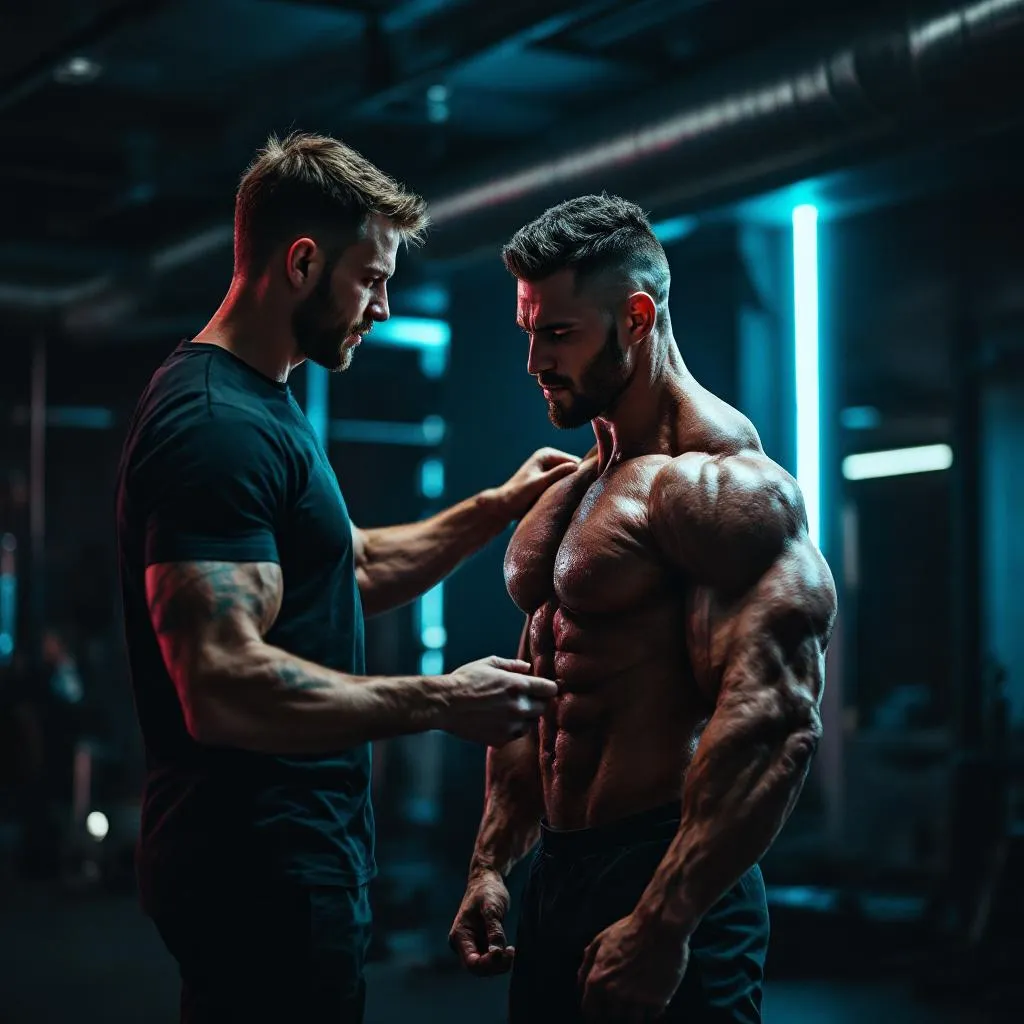
Searching "bodybuilding coach near me" is a reasonable first step — but it often misses the best options available to you. A local bodybuilding coach may be available at your nearest gym or through a regional trainer directory, yet the majority of elite physique specialists operate online, serving athletes globally without geographic limitation. This guide helps you search locally, evaluate what you find, and make a clear-eyed decision about whether in-person or online coaching is right for your goals.
For background on what a bodybuilding coach actually does and how the role differs from general personal training, start with the companion guide on what a bodybuilding coach is.
Key Takeaways
- The majority of elite physique and contest-prep coaches operate online — a local search returns only the coaches in your geographic area, which is a small subset of the specialists actually available to you
- According to the ACSM 2009 Position Stand on Resistance Training, hypertrophy-focused programmes require specific rep ranges (6–12), load percentages (67–85% 1RM), and rest periods (60–90 seconds) — parameters a genuine bodybuilding specialist will set and monitor, distinct from general personal training
- Online bodybuilding coaching typically costs $100–$400/month, compared to $600–$2,400/month for equivalent in-person specialist coaching — while delivering the same programming depth, weekly check-in structure, and nutritional management
- Schoenfeld (2010) identified three primary mechanisms of muscle hypertrophy — mechanical tension, metabolic stress, and muscle damage — all of which must be systematically targeted in a bodybuilding programme; coaching quality, not geography, determines how well these are applied
- A bodybuilding coach's value is in weekly data-driven adjustments to your programme and nutrition based on progress photos, bodyweight trends, and training logs — a process that works equally well asynchronously online as it does in person
What to Look for in a Local Bodybuilding Coach
A qualified local bodybuilding coach should hold a recognised exercise science credential, demonstrate a structured programming methodology specific to hypertrophy, and have verifiable client results across multi-month training periods — not just 12-week transformation photos.
Credentials that signal genuine expertise:
- CSCS (Certified Strength and Conditioning Specialist, NSCA) — the most rigorous programming credential, requiring a bachelor's degree and demonstrating advanced exercise physiology knowledge. The gold standard for anyone designing periodised hypertrophy programmes.
- NASM-CPT or ACSM-CPT — foundational personal training certifications that establish exercise safety and basic programme design competency.
- Competition experience — coaches who have competed in bodybuilding, physique, or figure categories understand the practical demands of peaking, contest prep, and the psychological pressure of show day. Coaching ability is separate from competitive success, but real-world experience matters.
- Nutrition certifications — Precision Nutrition Level 1, ISSN-SNS, or similar if the coach is providing specific macro targets. Note the scope boundary: individualised medical nutrition therapy is the domain of a registered dietitian, not a personal trainer.
Questions to ask before committing:
- What does your weekly check-in structure look like?
- How do you periodise programming across an off-season vs contest prep?
- Can I see client progress across a 6–12 month coaching period?
- How do you adjust nutrition based on weekly data?
How to Find a Bodybuilding Coach Near You
Finding a genuine bodybuilding specialist locally — not a general personal trainer who dabbles in physique work — requires a more targeted search than typing "personal trainer near me" into Google.
Effective local search strategies:
Bodybuilding shows and competition venues. This is the highest-signal approach. National Physique Committee (NPC) events, IFBB Pro shows, and natural bodybuilding federation competitions attract coaches who are actively working with competitive athletes. Showing up at a local or regional show and talking to athletes backstage or post-competition is one of the most direct ways to find who is actually doing serious physique work in your area.
Powerlifting meets and strength events. Many coaches who work with physique athletes also coach competitive powerlifters and strongman competitors. These events create concentrated pools of serious athletes and the coaches who train them.
Targeted Google searches. "NPC coach [city]", "contest prep coach [city]", or "physique coach [city]" will return more relevant results than "bodybuilding personal trainer near me" — which tends to surface general fitness studios.
Instagram and regional fitness communities. Search location-tagged posts around local gyms, bodybuilding meets, or physique competitions. Coaches who actively document client progress across full competition prep cycles are showing their work in real time.
What to evaluate before reaching out:
A coach's public presence tells you a lot. Look for: client progress documented across extended periods (not just peak-week reveals), posts that explain the reasoning behind programming decisions, and engagement with the science (citing volume research, periodisation principles, or nutritional literature) rather than just motivational content.
The key filtering problem: most local gym trainers are general fitness personal trainers, not bodybuilding specialists. A NASM-CPT with 3 years of general fitness experience and a local gym client base is not a bodybuilding coach. The filtering question is not "is this person a personal trainer?" but "does this person specifically program for hypertrophy, body composition, and physique development as their primary or exclusive practice?"
Local vs Online Bodybuilding Coach — Which Is Better?
For most physique athletes, online coaching provides better access to specialist expertise at significantly lower cost — while delivering equivalent programming depth, nutritional management, and weekly monitoring. In-person coaching wins in specific circumstances where live technique instruction and gym floor correction are genuinely necessary.
Where in-person coaching wins:
If you are a complete beginner who has never trained with free weights before, live technique coaching for foundational movements — squat, deadlift, bench press, overhead press, Romanian deadlift — is genuinely valuable. Form errors that go uncorrected compound over months of training and can lead to injury or suboptimal muscle recruitment. If you are learning these movements from scratch, a local coach with strong technical knowledge is worth the investment for the first 3–6 months.
The other scenario where local coaching is irreplaceable: competitive athletes who are part of a team or training group coached by the same person in the same gym. The communal environment, shared accountability, and group training energy are real benefits that online coaching cannot replicate.
Where online coaching wins:
Once you have competent baseline technique, the training variables that drive hypertrophy — volume, intensity, frequency, exercise selection, progression scheme, rest periods — can be designed and adjusted entirely through a structured remote coaching relationship. According to the ACSM 2009 Position Stand, hypertrophy training requires 6–12 repetitions at 67–85% of one-repetition maximum with 60–90 second rest intervals. These parameters are specified in the programme, not observed from across the gym floor.
The physique coaching industry has migrated predominantly online for a reason: the value a coach delivers is in the programme design, the weekly adjustments, and the nutritional management — all of which are mediated by data (progress photos, weigh-ins, training logs, subjective wellbeing reports) that can be collected and reviewed asynchronously.
For online strength coaching at the serious physique level, the coaching quality ceiling is higher online than local, because you are selecting from a global talent pool rather than whoever happens to be certified within driving distance.
Pro tip
Contest prep requires specialist knowledge. If your goal is competing — whether NPC, IFBB, or a natural federation — seek a coach who has run multiple athletes through full contest prep cycles, not just off-season bulk phases. The precision nutritional management during the final 12 weeks (deficit magnitude, protein targets per Helms et al. 2014 at 2.3–3.1 g/kg lean body mass, peak week water and carbohydrate manipulation) is a distinct specialisation from general hypertrophy coaching. Most gym-based personal trainers do not have this experience.
What Does Bodybuilding Coaching Cost?
Bodybuilding coaching costs vary significantly between in-person and online delivery. In-person personal training at a gym typically runs $60–$120 per session for a general PT — but a genuine physique specialist in a major metropolitan area may charge $100–$200 per session. At 3–6 sessions per week, that is $1,200–$4,800 per month for in-person coaching, with no guarantee the coach is a bodybuilding specialist rather than a generalist.
Online bodybuilding coaching operates on a monthly retainer model and typically costs $100–$400 per month, covering:
- Full weekly programme (or block-based programme updated every 4–6 weeks)
- Macro targets and nutritional guidance updated based on weekly data
- Weekly check-in review: progress photos, bodyweight trend, training log feedback
- Communication access via app or DM for programming questions
What drives the cost difference: In-person training bills for the coach's physical time — travel, session delivery, setup. Online coaching bills for expertise — programme design, data analysis, ongoing adjustments. The coaching value is in the expertise, not the physical presence, which is why online pricing can be structurally lower while delivering equivalent or superior specialist access.
For perspective on the programming complexity that justifies ongoing coaching investment: the ACSM 2009 Position Stand identifies that effective hypertrophy programming requires systematically manipulating training volume, intensity, frequency, and rest periods across training phases — a level of ongoing management that is qualitatively different from attending group fitness classes or following a generic app programme.
How Online Bodybuilding Coaching Works
An online bodybuilding coaching relationship follows a structured weekly cycle regardless of time zone or location. Understanding the process helps you evaluate whether a specific coach's system matches your needs.
The weekly check-in cycle:
- Data submission (typically Sunday): Progress photos (front, side, back) in consistent lighting and posing position; morning bodyweight average for the week; workout logs from all sessions; subjective ratings — sleep quality, energy, stress, hunger.
- Coach review: The coach compares this week's data to the previous week's. Key questions: Is bodyweight trending appropriately? Are progress photos showing body composition change in the right direction? Are training logs showing progressive overload? Are subjective markers indicating appropriate recovery?
- Programme and nutrition adjustments: Based on the data, the coach updates calorie and macro targets, adjusts training volume or intensity, or modifies exercise selection. These updates are delivered before your next training week begins.
- Communication loop: Athletes can message questions about exercise execution, unexpected life disruptions, or training adaptations. Async response (within 24–48 hours) is standard; real-time availability varies by coach.
This cycle matches what Schoenfeld (2010) identified as the programme management required to systematically target all three mechanisms of hypertrophy — mechanical tension, metabolic stress, and muscle damage — across a full training year. For more on how periodisation structures these training blocks, see the guide on strength training periodisation and the breakdown of how hypertrophy differs from strength training.
What to expect across a timeline:
- Weeks 1–4: Baseline establishment. Coach assesses your training capacity, recovery, and body composition response to initial programming. Expect conservative starting volume while your response patterns are mapped.
- Months 2–3: Programme intensification. Volume and load increase as your baseline is established. Nutritional targets are refined based on bodyweight trend and body composition data.
- Months 3–6+: Meaningful body composition change becomes measurable. A 6-month coaching period is the minimum meaningful timeframe for evaluating a bodybuilding coach's work. Shorter evaluations are unreliable.
How to Find the Best Bodybuilding Coach for Your Goals
The best bodybuilding coach for you is the one who specialises in your specific goal type, communicates clearly, and has a verifiable track record of client results across multi-month coaching relationships.
Step 1: Define your goal precisely.
- Off-season muscle building (caloric surplus, high training volume)
- Body recomposition (maintenance calories, simultaneous fat loss and muscle gain)
- Contest prep (structured deficit, peaking protocols, show-day readiness)
- Physique improvement without competitive intent (build and cut cycles, body composition focus)
Different goals require different specialisations. A coach who excels at off-season programming may have limited contest prep experience, and vice versa. Be specific when screening candidates.
Step 2: Vet credentials and client results.
Request to see client transformation photos that span a minimum of 6 continuous months of coaching. Ask about the athlete's starting point, goal, and training history. Twelve-week "before and afters" are the minimum meaningful window — but they do not distinguish between coaching quality and caloric restriction. Six-month and twelve-month results, showing progressive muscle development or successful contest prep completion, are the signal that matters.
Step 3: Evaluate the intake process.
A good coach asks detailed questions before providing a programme or a quote. Expected intake questions include: training history, current training frequency and structure, prior coaching experience, dietary preferences and restrictions, body composition measurements or estimates, goal timeline, and competition history if applicable. A coach who offers a programme without gathering this data is not doing individualised coaching.
Step 4: Use curated discovery platforms.
The IronCoaching marketplace connects athletes with verified physique coaches who have established profiles, training specialisations, and client results — a more structured search than scrolling Instagram for hours. Coaches on the platform use the IronCoaching program builder to deliver structured periodised programmes and manage weekly check-ins at scale.
Step 5: Run a test consult.
Most online coaches offer a discovery call or intake consultation before onboarding. Use it to evaluate: Does the coach ask about your history, or do they pitch immediately? Can they explain their periodisation approach in plain terms? Do they set realistic timelines or promise accelerated results? A coach who promises 20 lb of muscle in 3 months is not working from evidence-based principles.
For a comprehensive checklist of what to look for when hiring — including specific questions, credential requirements, and red flags — see the full guide to finding a personal trainer for bodybuilding. For the nutrition side, the evidence-based targets a bodybuilding coach will manage are covered in the guide on how much protein to build muscle.
Is a Local Bodybuilding Coach Worth It?
A local bodybuilding coach is worth it in specific circumstances — primarily for beginners learning foundational movement patterns, and for athletes who specifically value gym floor presence and live technique correction. For intermediate and advanced athletes pursuing serious physique development, contest prep, or multi-year body composition goals, online coaching with a genuine specialist typically delivers superior results at meaningfully lower cost.
The limiting factor with local coaching is not quality in theory but access in practice. Elite bodybuilding coaches — those with proven contest prep systems, deep hypertrophy programming expertise, and structured weekly monitoring — are not evenly distributed across geographies. In most cities outside major fitness hubs, a search for a genuine bodybuilding specialist near you will surface one or two qualified coaches at most, if any. Online coaching removes this constraint entirely.
For the specific mechanics of what drives muscle growth and why how to build muscle fast requires a systematic approach beyond generic gym programmes, that guide covers the hypertrophy principles a bodybuilding coach will apply week over week.
Frequently Asked Questions
A local in-person bodybuilding coach typically charges $60–$120 per session, totalling $600–$2,400 per month for 3–6 sessions per week. Online bodybuilding coaching costs $100–$400 per month for full programme delivery, weekly check-ins, and nutritional management — roughly 30–60% lower than equivalent in-person specialist access.
Yes — the majority of elite physique coaches operate online. Online coaching provides access to the global pool of bodybuilding specialists, not just those within driving distance. The check-in structure (weekly photos, weight, training logs) works equally well asynchronously. Most serious physique athletes and competitive bodybuilders use online coaches.
A bodybuilding coach specialises exclusively in hypertrophy, body composition, and physique development — using periodised programming, weekly data-driven check-ins, and structured nutritional management. A general personal trainer addresses broader fitness goals (health, endurance, weight loss, functional fitness) and typically programs session-by-session rather than through a continuous monitoring framework.
Look for: CSCS, NASM-CPT, or ACSM-CPT credentials; client transformation photos spanning 6+ continuous months (not just 12-week snapshots); a clear explanation of their periodisation approach; a structured weekly check-in protocol; and experience with your specific goal (off-season building, contest prep, or body recomposition). The absence of verifiable credentials or multi-month client results is a red flag.
Weekly check-ins are the standard structure in evidence-based physique coaching. Each check-in typically includes: progress photos (front, side, back), daily morning bodyweight average, training log review, and subjective wellbeing ratings. The coach uses this data to adjust programme variables and nutritional targets before the next training week begins.
A bodybuilding coach provides: hypertrophy-specific periodisation (systematically manipulating volume, intensity, and frequency across training blocks); structured macro targets adjusted weekly based on body composition data; comprehensive weekly monitoring of progress photos and bodyweight trends; and contest prep expertise if applicable. The ACSM 2009 Position Stand specifies the precise parameters — 6–12 reps, 67–85% 1RM, 60–90s rest — that a bodybuilding specialist programs to; most general PTs do not operate with this level of specificity.
Yes — but verify the coach has specific contest prep experience, not just general hypertrophy coaching. Contest prep requires: calibrated caloric deficit management, protein targets maintained at 2.3–3.1 g/kg lean body mass during a cut (per Helms et al. 2014), conditioning work integration, and peak week protocols around carbohydrates, sodium, and water. These are distinct specialisations from off-season coaching.
Online coaching is the better option for most intermediate and advanced physique athletes: lower cost, access to global specialists, and equivalent programming and monitoring quality. In-person coaching adds value primarily for beginners learning foundational technique or athletes who specifically need gym-floor presence and live form correction. Outside major metropolitan fitness hubs, local specialists are rare — online coaching is often the only practical route to genuine expertise.
Sources & References
- Schoenfeld, B.J. (2010). The Mechanisms of Muscle Hypertrophy and Their Application to Resistance Training. Journal of Strength and Conditioning Research, 24(10), 2857–2872. — Primary mechanism framework for hypertrophy-focused programming
- American College of Sports Medicine. (2009). Progression Models in Resistance Training for Healthy Adults. Medicine & Science in Sports & Exercise, 41(3), 687–708. — Evidence-based rep ranges, load percentages, and rest periods for hypertrophy
- Helms, E.R., Aragon, A.A., & Fitschen, P.J. (2014). Evidence-based recommendations for natural bodybuilding contest preparation: nutrition and supplementation. Journal of the International Society of Sports Nutrition, 11, 20. — Protein targets during contest prep deficit phases
- NSCA — Strength and Conditioning Professional Standards and Guidelines — Professional standards for strength and conditioning credential holders
- ACE Fitness — How to Choose a Personal Trainer — Consumer guidance on evaluating personal trainer credentials and fit